[Q&A] What Does Management Accounting Actually Tell You?
Management accounting lets you manage profitability by product, customer, and channel, plus your cost structure, budgets, and KPIs. Here's how FP&A turns financial data into the language of decisions.
![[Q&A] What Does Management Accounting Actually Tell You?](https://framerusercontent.com/images/o4dLsLAp4uFm9AqsdEaR5ODBhZY.jpg)
Interest in management accounting keeps climbing.
But the moment teams try to get started, they often can't get a clear read on where management accounting begins and ends, or how it differs from the financial management they already do.
In this piece, we'll organize the key things management accounting lets you see, grouped by category.
Q. What can management accounting tell me, and how does it help?
Profitability Analysis
"Revenue went up, so why did profit go down?" Traditional financial metrics couldn't answer that, because they only show profit as a single consolidated total. Management accounting breaks performance down by product, customer, and channel.
Item | Definition | What it means | How to use it |
|---|---|---|---|
P&L by product, customer, and channel | Breaking profit out by unit rather than viewing it as one total | Pinpointing what drives profit and what drives loss | Doubling down on profitable products and customer segments; fixing underperforming channels |
Margins (gross margin, operating margin, etc.) | Profit as a percentage of revenue | Comparing levels of profitability | Setting pricing strategy; benchmarking against competitors |
Cost Structure Analysis
"We need to cut costs" comes down from the top, but it's hard to know where to start or how. Management accounting classifies costs by their nature and gives leadership a real basis for judgment.
Item | Definition | What it means | How to use it |
|---|---|---|---|
Fixed vs. variable cost split | Separating costs that move with revenue from those that don't | Understanding cost structure and analyzing leverage | Calculating BEP; optimizing costs |
Direct vs. indirect cost allocation | Costs traceable to a specific product, department, or project vs. costs that must be allocated | Reflecting cost accurately | Product-level costing; P&L assessment by business unit |
Cost and Break-Even Management
"Which product is the most profitable, and how do we bring costs down?" In traditional financial accounting, cost structure and the break-even point (BEP) could only ever be ballparked. Management accounting answers those questions through cost structure and break-even analysis.
Item | Definition | What it means | How to use it |
|---|---|---|---|
Break-even point (BEP) | The revenue level at which profit equals zero | Your minimum target-revenue benchmark | Sales strategy; invest-or-exit decisions |
Contribution margin | Revenue minus variable cost | The core engine of profit creation | Analyzing contribution by product and project |
Cost ratio | Cost as a percentage of revenue | Assessing the profitability of a product or service | Pricing decisions; cost reduction |
Planning and Performance Management
Financial accounting moves to the rhythm of statutory reporting, so it can't tell you whether the numbers are tracking to plan or drifting off course. Management accounting compares budget against actuals and ties performance back to KPIs.
Item | Definition | What it means | How to use it |
|---|---|---|---|
Budget vs. actual | Comparing planned figures against actuals | Checking how well you're hitting plan | KPI management; root-cause analysis |
KPI management | Linking key performance indicators to financial metrics | Assessing execution against strategy | Performance management; tracking progress to goals |
Cash Flow and Financial Health
Plenty of companies post a profit on the income statement yet still run short on cash, because profit and cash flow are not the same thing. Management accounting lets you assess both the flow of cash and the underlying financial health of the business.
Item | Definition | What it means | How to use it |
|---|---|---|---|
Cash flow analysis | Mapping the pattern of cash inflows and outflows | Surfacing a cash position that differs from reported profit | Short-term cash management; timing investments |
Turnover metrics (receivables, payables, etc.) | The speed at which assets and liabilities turn over | Assessing the ability to convert to cash | Cash planning; credit management |
💡 TIP. What You Need in Place Before Starting Management Accounting
Management accounting can reveal a great deal, but doing it right takes a few prerequisites.
Putting the following in place is the first step toward getting started.✅ Can you break out P&L by product, customer, and channel?
✅ Have you defined a method (e.g., regression analysis) for separating fixed and variable costs?
✅ Do you have a basis for allocating direct and indirect costs?
✅ Is there a system for building budgets and comparing them against actuals?
✅ Can you tie KPIs to financial metrics to manage performance?Only with this foundation does management accounting become an executable financial-management system rather than just theory.
Management accounting isn't simply a tool for slicing profit into pieces.
It's the process of translating a company's entire financial activity, from profitability to cost to product costing to performance to cash flow, into the language of management.
But running it isn't easy. Pulling data out of the ERP, wrangling it in Excel, and building the reports alone eats up enormous time and invites errors. And since this is a domain that deals in numbers and accountability, the validation process alone is no small feat.
👉 Numen builds on your ERP ledger data to run management accounting with 100% accuracy and reliability.
Auto-generated P&L reports by product and customer
Fixed/variable cost separation, with contribution-margin and BEP analysis
Structured budget-vs-actual comparison and KPI management
Visualized cash flow and turnover metrics
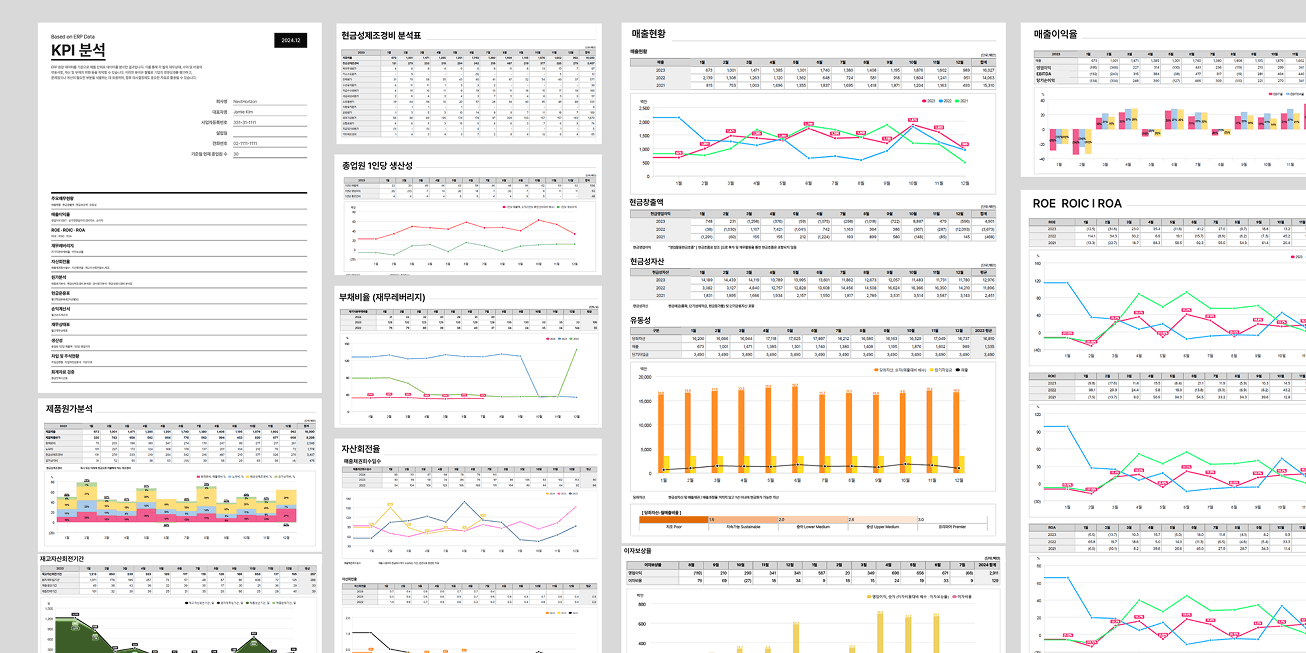
No more tangled spreadsheets, just a real-time, executable FP&A (management accounting) environment.
If you want to start FP&A but don't know where to begin, Numen makes it easy.
✨⚙️ Ready to bring AI into your FP&A function?
Get FP&A insights validated on the floor — delivered every Tuesday morning.

![[Q&A] Can You Do FP&A Without a Dedicated Team?](https://framerusercontent.com/images/TelYmjwSpuKtqbtPQ8c9GQvahCc.jpg)
![[Reader Q&A] We think our company is being valued too low. Are there financial metrics we should be managing?](https://framerusercontent.com/images/kVdi7Fi4mNWlwKmNrikoccZYoM.jpeg)