5 Financial Questions Every FP&A Team Has to Answer
Five core financial questions FP&A teams face on the job — and what they reveal about the role of management accounting and how to solve real problems.

In practice, the line between an FP&A team and a traditional accounting or finance team often feels blurry.
If you're not steeped in the numbers, it's easy to think, "isn't it all just working with numbers anyway?"
In this piece, we'll walk through five core questions an FP&A practitioner actually runs into on the job — and use them to surface the metrics and analytical lenses traditional accounting and finance teams tend to miss, and how an FP&A team answers these questions through the lens of management accounting.
🗣️ Q1. "They say we're profitable right now — but exactly how much cash are we actually keeping?"
One of the things FP&A teams get asked for most is "controlling and interpreting cash flow."
A traditional accounting team?
Focuses on reporting profit off the income statement
Has a hard time interpreting the gap between cash flow and profitability
In other words, it's closer to "after-the-fact reporting" and somewhat removed from the job of reading and explaining cash flow in real time.
An FP&A team, on the other hand:
analyzes real cash-generating power — operating cash flow, EBITDA, and the like — and
diagnoses capital efficiency holistically, including ROIC and ROE.
Not just checking the balance, but acting as a strategic partner who controls the company's capital structure and growth headroom.
If you want a real-world example of "cash-flow management," read our earlier piece.
🔗 [Companies don't die from losses. They die from receivables.]
🗣️ Q2. "Division A's KPI (operating income) came in weak this month — where did it go wrong?"
An FP&A team doesn't just list out numbers — it traces how performance metrics moved and why, so the organization can make better decisions.
A traditional accounting team?
Focuses on budget-vs.-actual settlement reporting
Hits limits when it comes to interpreting or explaining why KPIs or P&L line items moved
So an FP&A team:
connects changes in KPI attainment back to the P&L structure, and
drills down by the line items that drive profit — revenue, COGS, SG&A, payroll, and so on.
Put simply, FP&A should be able to answer that question like this:
"Revenue was roughly flat versus last month, but payroll and logistics costs rose at the same time, and a higher mix of discounted sales dragged down gross margin. Net result: operating margin fell 3.2 points month over month. So next month we'll adjust the SG&A budget and hold off on any additional fixed-cost payroll spend."
Interpreting the movement and the cause structurally, in financial context — that's the real job of an FP&A team.
🗣️ Q3. "If we book this spend now, doesn't that put us in the red?"
More than whether a cost was incurred, an FP&A team's job is to forecast and judge when and how that cost hits the P&L.
A traditional accounting team?
Records and classifies incurred costs accurately
But doesn't forecast how that cost will flow through future P&L
An FP&A team, by contrast:
runs P&L simulations based on the timing of the spend, and
distinguishes whether it's one-time, recurring, or capitalizable, to
judge the ripple effect on future profitability.
For example, a question like this might come in:
"If we book the ~$200K software purchase this month, doesn't that put the quarter in the red? We're trying to raise, and a loss looks bad."
Here's how FP&A should be able to answer:
"The cash outlay is ~$200K, but for accounting purposes it's depreciated over three years, so only about ~$16K hits this quarter as expense. So there's no meaningful impact on this quarter's P&L."
It's the team that reframes the real impact of a cost within the P&L structure and lays out the basis for the call.
🗣️ Q4. "That team's marketing and payroll spend keeps climbing — is it worth it relative to results?"
More than "how much" a cost is, an FP&A team's job is to analyze how well that spend is converting into results.
A traditional accounting team?
Reports costs by GL account, which makes the causal link between spend and results (KPI-linked analysis) structurally hard to draw.
As a result, it's limited in quantitatively judging departmental performance or evaluating ROI.
An FP&A team, by contrast:
shows return on spend (ROI) by department in hard numbers, and
quantifies which results — revenue, profit, growth rate — the added cost actually contributed to.
So when a question like the one above comes in, FP&A should be able to explain it like this:
"That team's costs are up 28%, but its contribution to operating income is holding at 12.5% — still above the 9.8% department average. So far the cost increase hasn't translated into weaker performance, and we've prepared a scenario to dial back the payroll mix in case the growth curve flattens."
Explaining the link between cost and results in numbers and laying out the scenarios — that's how FP&A strategically supports how the organization allocates resources.
🗣️ Q5. "Aren't our fixed costs way too high compared to other companies?"
An FP&A team doesn't just manage internal numbers — it has to pressure-test the strategic soundness of the cost structure by benchmarking against peers or competitors.
A traditional accounting team?
Typically doesn't have the function to benchmark against external data; it focuses on internal settlement and compliance-driven reporting.
So "relative" analysis — like diagnosing your structure against the industry average or competitors — is hard to do.
An FP&A team, by contrast:
takes core structural items — cost ratio, fixed-vs.-variable mix, payroll-to-revenue, and so on — and
benchmarks them against the industry average or key competitors to
diagnose whether your cost structure is competitive in the market.
Work that used to belong to outside consultants now has to be something an internal FP&A team can explain to leadership directly:
"Our fixed-cost ratio is currently 38% — a bit higher than the ~33% average for comparable businesses. Payroll and depreciation make up a large share in particular, while SG&A efficiency relative to revenue is holding around the industry average. To ease the fixed-cost burden in the first half, we should pair an expanded outsourcing mix with some cost-flexibility measures."
Connecting both the external environment and the internal structure to lay out a concrete path to improvement — that's the role.
If you can answer all of the questions above, then whether you sit in accounting or finance, you're already doing the FP&A job — and doing it well.
But if these questions leave you stuck, or you find yourself thinking "our company just isn't structured to do this kind of analysis," it's time to change the approach.
Numen is an AI-powered finance solution that, built on your ERP ledger data, helps FP&A teams respond fast and accurately to the core questions they have to answer.
✅ Cash-flow analysis — automatically analyzes real cash flow: EBITDA, operating cash flow, monthly treasury reporting, and more
✅ KPI analysis — auto-generates performance reports for your key metrics
✅ KPI budgeting (simulation) — supports planning and budget construction
✅ KPI variance analysis — auto-generates projected income statements and balance sheets to pinpoint causes
✅ KPI budget management (performance tracking) — tracks attainment against KPI targets and provides budget-management tools
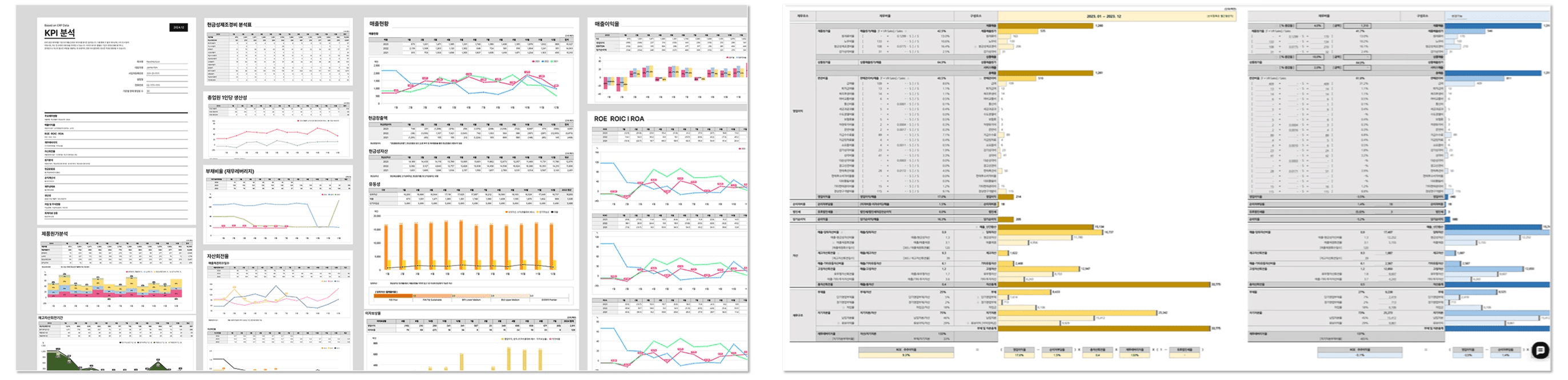
We help you answer — precisely — the core questions every FP&A team has to. Solve the structural limits and resource gaps with Numen.
✨⚙️ Want to bring FP&A AI into your finance function?
Get FP&A insights validated on the floor — delivered every Tuesday morning.