The Secret Behind "Planned Losses" and EBITDA: Why Investors Back Money-Losing Companies
"It's losing money — so why does it keep raising capital?" The startups that command billion-dollar valuations long after the pandemic share two things: a planned loss and a positive EBITDA. Here's why companies in the red still earn premium valuations — and how to make the case for your own, with real examples.

Startups that posted losses for years — and still earned billion-dollar valuations and fresh funding.
A pandemic-era story? Hardly. It's happening right now.
The key is the "planned loss" and EBITDA. How does a company that's in the red on its books still get a thumbs-up from investors? Let's unpack the common structure behind loss-making companies that keep raising capital — and how to use your own EBITDA to make the case for your value.
Let's start with the "planned loss"
When people hear "planned loss," the word "loss" usually triggers a negative reaction first. But the part worth focusing on isn't "loss" — it's the word right in front of it: "planned."
In English it's often called a strategic deficit or strategic loss: a deliberate strategy of absorbing short-term losses in exchange for long-term growth and profit. It means intentionally spending to capture market share, fund R&D, or land top talent.
Think of companies like Uber, Amazon in its early years, or Spotify — all of which racked up heavy losses at one point, then either flipped to profitability or proved the path to it and saw their valuations soar. These aren't just marketing spin; they're proof that the spending was a genuine "strategic choice" in service of real growth.
How EBITDA turns a "loss" into "value"
As noted, some companies do wield "planned loss" as pure marketing spin. So investors — and the market — need a way to judge whether a company's "planned loss" is a strategic choice or just a talking point. That benchmark is EBITDA.
A deeper dive on EBITDA > [What Is EBITDA? The Complete Guide to Profitability and Cash Flow]
Operating income can swing with accounting choices, but EBITDA is treated as a profitability metric that's closer to the cash a business actually generates. For example, even if a company shows an accounting loss, a positive EBITDA is read as: "This business has a structure that can make money."
In practice, the EV/EBITDA multiple is one of the most common ways to value a company, and it's a core working benchmark in the global M&A market. So EBITDA isn't just another financial metric — it's the figure that "reveals the value hidden behind a loss." That's why how you calculate EBITDA, and how persuasively you can present it, becomes the crux of raising capital.
✅ Example: an accounting-loss company vs. an EBITDA-based valuation
Line item | Accounting basis (operating income) | EBITDA basis |
|---|---|---|
Revenue | ~$10M | ~$10M |
COGS and SG&A | ~$9M | ~$9M |
Depreciation & amortization | ~$2M | (excluded from EBITDA) |
Operating income | -~$1M (loss) | +~$1M (positive) |
Valuation read | Could be flagged as a risky "money-losing company" | Apply EV/EBITDA multiple → valuation of ~$10M–$20M or more |
You can do this too: how to value a company off EBITDA
So EBITDA is the yardstick investors use — but how do you actually put it to work for your own company? It can feel complicated, but with the basic formula and an industry-average multiple, anyone can run a quick simulation.
✅ The valuation formula
EV (Enterprise Value) = EBITDA × EV/EBITDA multiple
Example:
EBITDA = ~$500K, multiple = 10x
▶ Enterprise value = ~$500K × 10 = ~$5M
✅ Sample EV/EBITDA multiples by sector
Here are the multiples commonly used across the industry.
Sector | Average multiple (EV/EBITDA) |
|---|---|
B2B SaaS | 8–12x |
Commerce/platforms | 6–9x |
Manufacturing | 4–7x |
Distribution/retail | 3–5x |
※ EV/EBITDA multiples vary by sector, timing, and strategy; real-world use requires selecting a proper peer group and making accounting adjustments.
※ You can source EV/EBITDA multiples from venture capital reports, comparable public-company IR materials, and industry research such as PitchBook and Meritech Capital.
🏢 Case Study
Sample company
B2B SaaS Company A, trailing-12-month EBITDA: ~$400K, B2B SaaS sector multiple: 10x
EBITDA-based estimated enterprise value: ~$4M (EBITDA of ~$400K × EV/EBITDA multiple of 10x)
∴ Even while posting an accounting loss, the structure supports raising capital on an EBITDA basis
⚡ Manage EBITDA the easy, fast way with Numen
As we've seen, if EBITDA is the key metric for making the case for your value, the next question is how quickly your company can calculate and manage it. With Numen, just upload your accounting data — your general ledger (ERP) — and it automatically computes and displays your EBITDA.
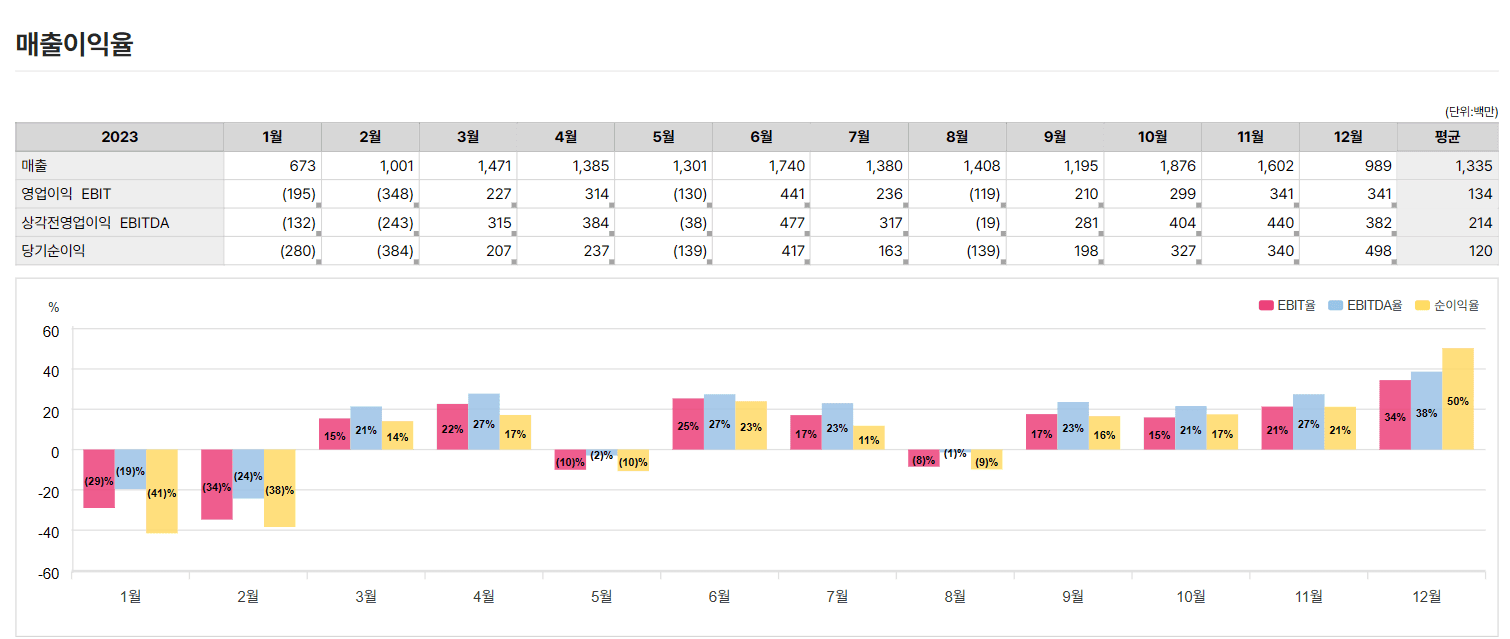
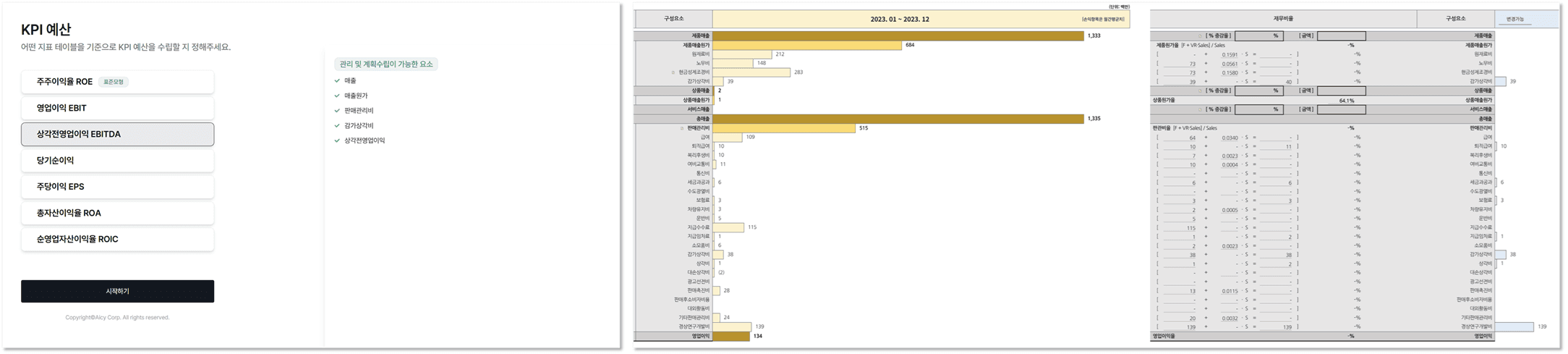
It lets you pick your EBITDA-based KPI with a single click and build scenarios around its component drivers.
Beyond crunching the numbers, you can run financial simulations that tie straight into decisions. With no separate modeling, you can see your company's EBITDA and explore which levers to pull to hit your target.
📥 Numen, your FP&A solution
→ It automates the full FP&A workflow — from budgeting to actuals analysis, forecasting, and KPI management.
✨⚙️ Calculate your monthly EBITDA automatically!
Get FP&A insights validated on the floor — delivered every Tuesday morning.